Solar Energy in Space Applications – Powering the Future of Space Exploration
- Kiran Shankar Maji
- Apr 12, 2025
- 5 min read

Updated: Apr 12, 2025
In today’s age of rapid space advancement, solar energy in space applications stands as a cornerstone of sustainable space missions, satellite operations, and the long-term survival of human colonies beyond Earth. From powering spacecraft systems to lighting up lunar bases, solar energy has transitioned from a supplementary source to a primary power backbone in extraterrestrial environments.
Let’s explore how this renewable resource is revolutionizing our presence in the cosmos.
What Is Solar Energy in Space?
Space-based solar energy involves harnessing sunlight beyond Earth's atmosphere to power different space technologies and habitats. Unlike systems on Earth, space applications benefit from constant access to sunlight, free from atmospheric particles or weather-related disruptions.
Why Is Solar Power Crucial for Space Missions?
Sustainability: Solar energy offers a clean, inexhaustible source of power, making it perfect for extended missions.
Reliability: With appropriate design, solar systems can endure for many years.
Portability: Solar panels are both lightweight and scalable, which makes them ideal for a variety of missions.
Differences Between Space and Earth-Based Solar Panels
Intensity of Sunlight: Solar panels in space are exposed to stronger and more consistent sunlight.
No Atmospheric Filtering: The absence of clouds and air particles leads to improved efficiency.
Thermal Fluctuations: Panels must endure a wide range of temperatures, from freezing cold to intense heat.
Types of Space-Grade Solar Cells
Solar Cell Type | Efficiency | Common Usage |
Monocrystalline Silicon | Moderate | Low-cost satellites |
Gallium Arsenide (GaAs) | High | GPS, ISS |
Multi-Junction Cells | Very High | Deep space probes |
Historical Development of Solar Energy in Space
First Solar-Powered Satellites
The Vanguard 1, launched in 1958, was the first to use solar cells, laying the groundwork for future developments.
Milestones in Space-Based Solar Technology
1962: Telstar 1 enabled live transatlantic TV powered by solar energy.
2000s: The International Space Station's vast solar arrays became iconic for orbital power generation.
Solar Power for Satellites
Powering Communication Satellites
The majority of geostationary satellites depend solely on solar panels and onboard batteries to guarantee continuous communication. These solar panels convert sunlight into electrical energy, which powers the satellite's systems and instruments. The onboard batteries store excess energy generated during sunlight exposure, ensuring that the satellite remains operational even during the periods when it is in the Earth's shadow. This reliance on solar energy not only provides a sustainable power source but also minimizes the need for fuel resupply missions, making geostationary satellites more efficient and reliable for long-term operations in orbit.
Solar Arrays for Navigation and Weather Satellites
Solar energy plays a crucial role in powering Earth observation tools, sensors, and data processing systems onboard navigation and meteorological satellites. By harnessing the sun's energy, these satellites can operate efficiently in space, collecting vital data about the Earth's atmosphere, weather patterns, and environmental changes. This renewable energy source not only ensures the longevity of satellite missions but also contributes to the sustainability of space operations. As a result, solar energy is integral to advancing our understanding of the planet and improving various applications, such as climate monitoring, disaster response, and resource management.
Solar Energy in Space Missions
Use in Robotic Spacecraft
From Voyager probes to Mars rovers, solar panels enable energy autonomy, critical for extended exploration.
Solar Propulsion Systems
New technologies use sunlight not just for electricity but for ion propulsion and electric thrusters, offering efficient movement in the vacuum of space.
Solar Panels on the International Space Station (ISS)
Design and Function of ISS Solar Arrays
The ISS features eight large solar arrays, each capable of rotating to track the Sun. They generate 80–120 kilowatts of power—enough for the station’s entire operation.
Energy Storage and Backup Systems
During orbital night, stored energy in nickel-hydrogen batteries keeps the station powered.
Solar Energy for Moon and Mars Missions
Artemis Program and Lunar Bases
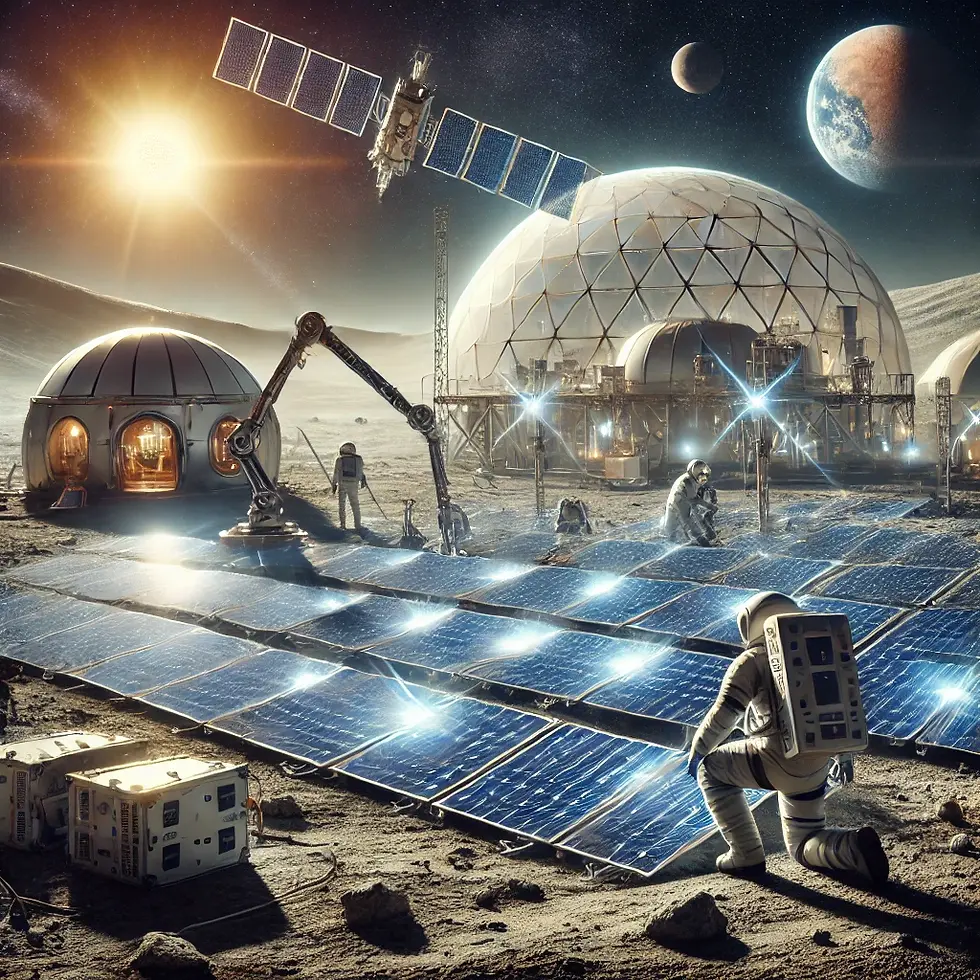
NASA’s Artemis missions aim to establish sustainable lunar infrastructure, heavily relying on compact, foldable solar arrays to energize habitats and rovers.
Solar Power Strategies for Mars Colonies
Mars receives less sunlight than Earth but enough for optimized solar farms, designed with dust-repellent coatings and robotic cleaning systems.
Solar Sails and Advanced Propulsion
What Are Solar Sails?
Solar sails use photon pressure from sunlight to propel spacecraft—without fuel! Think of it as sailing through space on beams of light.
Key Missions Using Solar Sail Technology
IKAROS (Japan): First interplanetary solar sail.
LightSail 2 (Planetary Society): Successfully demonstrated controlled solar sailing in 2019.
Building Extraterrestrial Solar Farms
Design Challenges in Harsh Environments
Temperature fluctuations
Dust storms (especially on Mars)
Lack of atmosphere for heat dissipation
Autonomous Solar Deployment Systems
Rovers and AI-driven bots can unfold, anchor, and repair solar farms, enabling hands-off energy harvesting.
Benefits of Using Solar Energy in Space
Unlimited Power: As long as there’s sunlight, there’s energy.
Eco-Friendly: No emissions or waste.
Cost-Effective: Reduces the need for heavy fuel loads.
Challenges of Solar Power in Space
Radiation Damage: Solar cells degrade under cosmic radiation.
Panel Degradation: Micrometeoroid impacts and thermal stress reduce lifespan.
Power Storage: Batteries still struggle to store large amounts of energy efficiently.
Innovations in Space Solar Technology
Perovskite and Multi-Junction Solar Cells
New materials like perovskite promise lightweight and highly efficient solar energy collection.
Flexible and Foldable Solar Panels
Space agencies are designing origami-style panels that unfold in space, saving launch space and weight.
Wireless Power Transmission from Space
Concept of Space-Based Solar Power (SBSP)
SBSP aims to collect solar power in orbit and beam it back to Earth or another base.
Microwave and Laser Beaming Technologies
High-efficiency microwave or laser transmitters can deliver power safely across vast distances—tested by NASA and JAXA.
Environmental Impact and Sustainability
Clean Energy vs. Nuclear Alternatives
While radioisotope thermoelectric generators (RTGs) are still used, solar offers a safer and cleaner alternative for long-duration missions.
Future-Proofing Space Exploration
Solar technology aligns with Earth’s push for renewable energy, promoting long-term sustainability in outer space.
Future of Solar Power in Interstellar Missions
Potential in Deep Space Exploration
Though solar intensity drops with distance, new tech like concentrated solar optics could make solar power feasible even in the outer solar system.
Hybrid Power Systems
Combining solar panels with nuclear backup ensures reliability across diverse mission environments.
Frequently Asked Questions
Q1: How efficient are solar panels in space compared to Earth?
A1: Space panels are generally 2–3 times more efficient due to direct sunlight and lack of atmospheric interference.
Q2: Can solar panels work on Mars?
A2: Yes, though they produce less power than on Earth. Dust storms can affect efficiency, but new materials help mitigate this.
Q3: How are solar panels maintained in space?
A3: Most systems are autonomous. On the ISS, astronauts perform periodic cleaning and realignment.
Q4: Is solar energy enough for long space missions?
A4: For missions within the inner solar system, yes. Beyond that, hybrid systems are often used.
Q5: What happens when a satellite is in Earth’s shadow?
A5: It uses battery storage, which is charged during sunlight exposure.
Q6: Can solar energy power a human base on the Moon?
A6: Absolutely. In fact, NASA and ESA are already developing modular solar farms for upcoming lunar missions.
Conclusion
Solar energy in space applications isn’t just a technical necessity—it’s a visionary approach to how we sustain life and operations beyond Earth. As missions stretch further into the cosmos, the role of solar power will only grow. With ongoing innovations, it will continue to shine as humanity’s beacon toward a cleaner, smarter spacefaring future.


Comments